Your plugs & sockets
Voltage
110V
Frequency
60Hz
Plugs
A, B, C, L

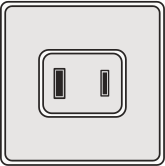
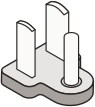
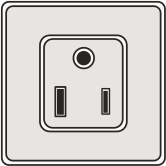
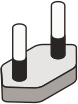
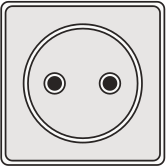
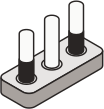
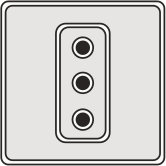
Plugs & sockets in Denmark
Voltage
230V
Frequency
50Hz
Plugs
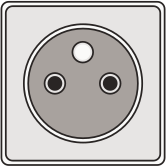
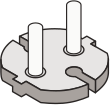
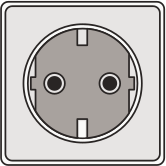
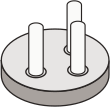
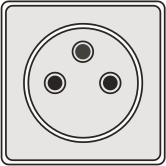
C, E, F, K
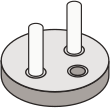

Travel Adapter for Denmark: Do You Need One? (Cuba → Denmark)Adapter Needed
If you're heading to Denmark from Cuba, sorting out the power situation is one of the easiest pre-trip wins. Below you'll find the plug types, voltage, and frequency used in Denmark, whether you need an adapter, and which devices are safe to plug in.
Do you need a travel adapter for Denmark?
Good news: you generally don't need a plug adapter. Both Cuba and Denmark use Type C outlets, so your existing plugs should fit Denmark's sockets directly. A universal adapter is still worth keeping in your bag as a backup for future trips.
What plugs and sockets does Denmark use?
Denmark uses these power plug types: Type C (Europlug): two round pins, ungrounded, and the most widely used plug across Europe; Type E: two round pins with a hole for the grounding pin in the socket, used in France and Belgium; Type F (Schuko): two round pins with grounding clips on the sides, standard in Germany and much of Europe; Type K: two round pins with a grounding pin, used in Denmark. Outlets run at 230V and 50Hz. Since Cuba also uses Type C, your plugs already match.
Voltage and frequency in Denmark
Denmark supplies 230V at 50Hz, which differs notably from the 110V used in Cuba. This matters most for single-voltage, high-wattage appliances such as hair dryers, straighteners, curling irons, and electric kettles. Plugging a 110V-only device into a 230V outlet can overheat or destroy it. Check each device's label: if it reads "INPUT: 100-240V" it handles both and you only need a plug adapter; if it lists a single voltage, bring a voltage converter or leave it home.
Will your devices work in Denmark?
Phones, tablets, laptops, and camera chargers are nearly always dual-voltage (100-240V), so they work in Denmark with just your existing plug, and no converter is required. The devices to watch are heat-based appliances: hair dryers, flat irons, and travel kettles are often single-voltage and can fail on Denmark's 230V supply. Many travelers simply buy a dual-voltage travel version or rely on the hotel's hair dryer.
What travel adapter should you buy for Denmark?
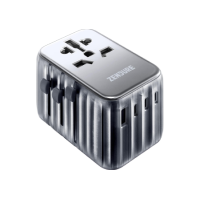
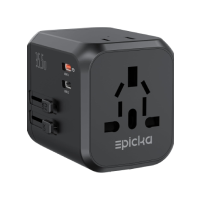
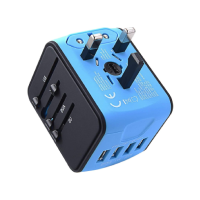
Because Cuba and Denmark share Type C outlets, you don't need a special adapter for this trip. A universal travel adapter is still a smart, inexpensive backup if you plan to travel elsewhere, and the better ones add USB-C fast charging to free up your charger.
Tips for charging your devices in Denmark
Pack at least one adapter per traveler, and consider a small power strip from home, which turns a single Denmark outlet into several. Ordering online before you fly is almost always cheaper than airport kiosks.


